 Nimorin
CULTURE
A Small Polite Word
คำสุภาพสั้น ๆ
kham sù-phâap sân sân
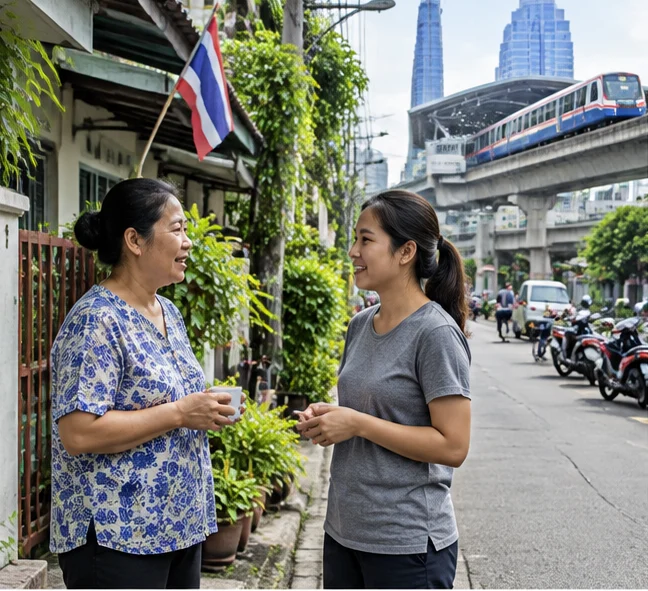
A neighborhood shop in Bangkok
In this story the male learner uses ครับ; polite particles such as ครับ and ค่ะ reflect speaker identity and context, not one universal form.
ผมซื้อน้ำที่ร้านใกล้ห้องพัก
phǒm sʉ́ʉ náam thîi ráan klâi hɔ̂ŋ phák
I buy water at the shop near my room.
เจ้าของร้านพูดขอบคุณ แล้วเติมคำว่า ค่ะ ท้ายประโยค
câo khɔ̌ɔŋ ráan phûut khɔ̀ɔp khun lɛ́ɛo təəm kham wâa khâ tháai prà-yòok
The shopkeeper says thank you and adds kha at the end.
ผมพูดตามเธอ แต่ต้นเพื่อนผมดูแปลกใจ
phǒm phûut taam thəə tɛ̀ɛ tôn phʉ̂an phǒm duu plɛ̀ɛk cai
I copy her, but my friend Ton looks surprised.
ผมถามต้นว่า ค่ะ แปลว่าขอบคุณด้วยไหม
phǒm thǎam tôn wâa khâ plɛɛ wâa khɔ̀ɔp khun dûai mǎi
I ask Ton whether kha means thank you too.
เขาอธิบายว่าคำนี้เพิ่มความสุภาพ ไม่ได้แปลว่าขอบคุณอีกครั้ง
khǎo à-thí-baai wâa kham níi phə̂əm khwaam sù-phâap mâi dâi plɛɛ wâa khɔ̀ɔp khun ìik khráŋ
He explains that it adds politeness, not another thank you.
ผมลองพูดว่า ขอบคุณครับ แล้วต้นก็ยิ้ม
phǒm lɔɔŋ phûut wâa khɔ̀ɔp khun khráp lɛ́ɛo tôn kɔ̂ yím
I try saying thank you with khrap, and Ton smiles.